How to Track Batch Numbers and Product Expiry Dates in Retail: Complete Store Guide
Master batch number tracking and product expiry date management in retail. Learn FEFO inventory methods, reduce unsellable waste, and prevent statutory penalties.

For retail businesses dealing in perishable or regulated goods—such as pharmacies, medical stores, grocery supermarkets, cosmetic outlets, and packaged food distributors—managing inventory involves far more than merely counting units. Every item comes with a strict expiration window and a distinct manufacturing lot identity.
Selling an expired medicine or food item is not just an embarrassing customer service failure; it directly endangers consumer health and exposes business owners to severe statutory penalties, license suspensions, and legal prosecution under the Drugs and Cosmetics Act or the Food Safety and Standards Authority of India (FSSAI) regulations.
Furthermore, discovering cartons of expired products sitting forgotten on back-room shelves represents a direct financial loss that erodes shop profitability. Implementing systematic batch number and product expiry date tracking transforms perishable inventory management from a chaotic liability into a controlled, automated process.
Direct Answer: How to Track Batch Numbers and Product Expiry Dates in Retail
To track batch numbers and product expiry dates in retail, implement a 4-step automated inventory workflow:
- Purchase Inwarding with Batch Details: Whenever shipments arrive from suppliers, record the specific manufacturer Batch Number, Expiry Month/Year, and Purchase Cost alongside item quantities.
- First-Expiry, First-Out (FEFO) Dispensing: Organize store shelves and configure your billing software to prioritize selling batches with the nearest expiration date first.
- Automated Near-Expiry Alerts: Use billing software with built-in alert thresholds (such as 30, 60, or 90 days before expiration) to identify slow-moving stock in time for clearance discounts or supplier returns.
- Transparent Invoice Printing: Ensure printed sales receipts clearly display the item batch number and expiry date, providing verifiable safety records for consumers and drug inspectors.
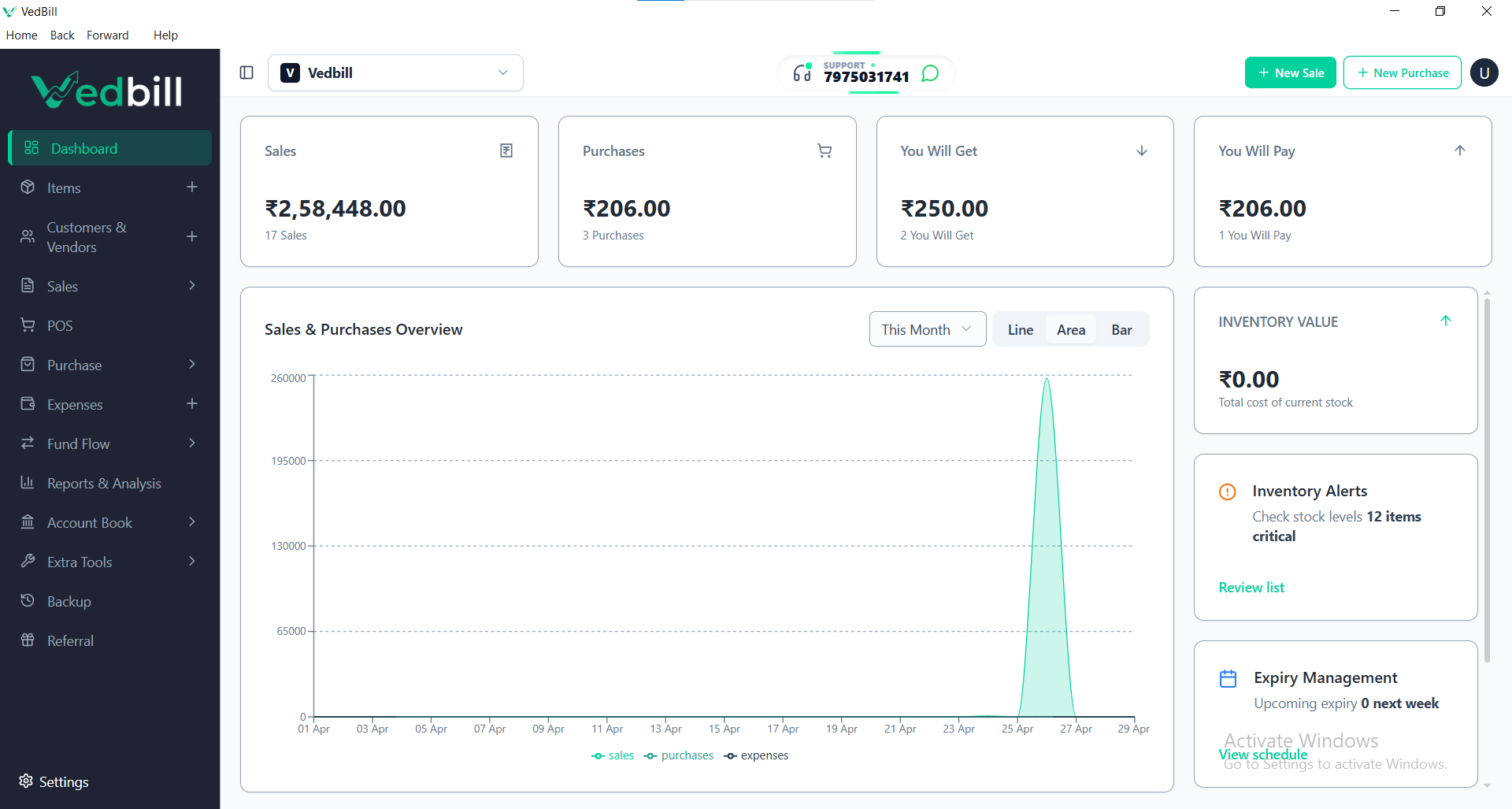
With offline desktop billing software like VedBill, batch tracking and near-expiry warnings operate automatically during routine counter billing without requiring manual ledger cross-checks.
The True Cost of Neglecting Expiry Date Management
Failing to manage batch numbers and expiration timelines causes severe operational and financial damage:
- Direct Inventory Write-Offs: Retailers who fail to track expiry dates typically lose 2% to 5% of their total annual inventory value to unsellable, expired goods discarded in trash bins.
- Regulatory Penalties and Shop Sealing: Drug inspectors and food safety officers conduct unannounced inspections. Finding expired antibiotics, baby food, or packaged dairy on retail shelves leads to immediate product seizures and heavy fines.
- Missed Supplier Return Deadlines: Most wholesale distributors and pharmaceutical manufacturers accept near-expiry returns for credit only if returned 60 to 90 days before the expiration date. If you notice expired stock after the expiration month passes, distributors will reject the credit claim.
- Damaged Customer Trust: A customer who discovers they purchased expired medicine or sour milk will immediately lose confidence in your store and take their business to a competitor.
Understanding FEFO vs FIFO: The Golden Rule of Perishable Retail
Many traditional retailers confuse FIFO (First-In, First-Out) with FEFO (First-Expiry, First-Out):
- FIFO (First-In, First-Out): Sells the stock that arrived at your store first chronologically. While helpful for non-perishable goods like hardware, FIFO fails when a distributor delivers a newer shipment that happens to carry an earlier expiration date.
- FEFO (First-Expiry, First-Out): Sells the product with the nearest expiration date first, regardless of when it was delivered to your warehouse. FEFO guarantees that merchandise closest to expiration reaches consumers before it becomes unsellable.
Modern billing software enforces FEFO by prompting counter staff to pick the oldest valid batch whenever a barcode is scanned.
Step-by-Step Implementation of Batch and Expiry Tracking
Follow these operational steps to build an airtight batch control system:
Step 1: Record Batch Details at Inward Delivery
Never accept stock into your store without logging batch details. In your billing software's purchase inwarding screen, enter:
- Product Name & SKU
- Manufacturer Batch / Lot Number (e.g.,
BN-84920) - Manufacturing Date (optional) and Expiry Date (MM/YYYY)
- Batch-specific MRP and Purchase Cost (as pharmaceutical prices frequently vary between batches)
Step 2: Shelf Merchandising Discipline
Train stock clerks to place new stock behind older stock on physical display shelves. Items with sooner expiration dates must sit at the front where customers naturally reach for them first.
Step 3: Configure Counter Expiry Alerts
Configure your software to prevent cashiers from accidentally billing expired goods. If an item is past its expiration date, the software must block the transaction with an immediate warning banner.
Step 4: Run Weekly Near-Expiry Reports
Every Monday morning, generate an automated report of all inventory expiring within the next 60 days. Separate these items into two actionable categories:
- Eligible for Supplier Return: Pack goods with 60–90 days remaining and return them to the wholesale distributor for credit notes.
- Eligible for Clearance Promotions: Place non-medicinal packaged goods on a high-visibility clearance display table with a 20% to 40% quick-sale discount.
Expiry Date and Batch Audit Checklist for Retailers
Use this checklist to evaluate your store's expiry control practices:
- [ ] Are all batch numbers and expiry dates recorded during supplier invoice entry?
- [ ] Does your billing software print batch numbers and expiry dates on customer receipts?
- [ ] Does the checkout counter display a warning if an expired item is scanned?
- [ ] Do you generate weekly reports for products expiring within 30, 60, and 90 days?
- [ ] Are near-expiry goods returned to wholesale distributors before their credit deadlines expire?
- [ ] Are physical shelves arranged using strict First-Expiry, First-Out (FEFO) placement?
Comparison: Manual Expiry Registers vs Automated Billing Software
| Feature / Task | Manual Notebook Register | Automated Billing Software (VedBill) | | :--- | :--- | :--- | | Data Entry Time | Tedious manual handwriting | Quick keyboard entry during purchase inward | | Counter Validation | Cashier must visually inspect tiny print on pack | Instant automatic scan and screen verification | | Expired Item Prevention| High risk of cashier human error | System blocks sale with immediate alert banner | | Near-Expiry Visibility | Requires flipping through hundreds of pages | One-click filter for items expiring in 30/60 days | | Statutory Compliance | High risk during drug inspections | Flawless audit trail with printed batch invoices | | Financial Losses | Substantial losses from unnoticed expired stock| Minimal waste via timely clearance & returns |
The VedBill Solution: Built-in Batch and Expiry Management
VedBill provides comprehensive batch and expiry tracking engineered for Indian pharmacies, grocery stores, and retail merchants:
- Batch-Wise Stock Tracking: Track multiple active batches for a single product SKU, each with independent MRPs, cost prices, and expiration dates.
- Automatic Expiry Warning System: Receive real-time counter alerts whenever a scanned item is close to expiration or already expired.
- Compliant Invoice Printing: Print clear batch numbers and expiry dates directly on thermal receipts and A4/A5 tax invoices to satisfy regulatory standards.
- Near-Expiry Reporting: Export detailed lists of upcoming expirations to Excel in seconds to facilitate distributor returns.
- 100% Free & Offline: Enjoy complete batch control without monthly software fees or internet requirements.
Frequently Asked Questions (FAQs)
1. Does VedBill allow selling the same medicine at different MRPs for different batches?
Yes. In India, pharmaceutical manufacturers frequently adjust prices across production runs. VedBill allows you to record different MRPs and purchase rates for different batch numbers of the exact same medicine SKU.
2. Can I set custom expiry warning windows (e.g., 60 days vs 90 days)?
Yes. You can customize the near-expiry threshold in VedBill so that the system flags goods according to your store's specific return agreement timelines with distributors.
3. What happens if a cashier tries to bill an expired product by accident?
VedBill immediately displays a high-visibility warning notification indicating that the selected batch has expired, preventing accidental sales to customers.
4. How does batch tracking help during product recalls?
If a pharmaceutical manufacturer or food brand issues a safety recall for a specific batch number, you can instantly search that batch in VedBill to see exactly how much stock remains on your shelves and generate a list of past customer transactions for that batch.
Conclusion & Next Steps
Proactive batch and expiry tracking protects your customers' health, ensures statutory compliance during regulatory inspections, and saves your store thousands of rupees in uncollected distributor returns.
Eliminate expired stock losses from your retail store today.
Download VedBill Free for Windows Desktop and take complete control of your batch numbers and expiry dates.
Manage Your Store with VedBill Desktop Software
VedBill is 100% free desktop billing software built for retail shops, supermarkets, pharmacies, and small businesses in India. No recurring subscriptions or expensive cloud fees.
VedBill Editorial Team
Retail & Billing Specialist at VedBill