How to Reduce Billing Errors and Stock Discrepancies in Retail Shops: Proven Strategies
Learn how to eliminate billing mistakes and inventory discrepancies in retail stores. Implement barcode automation, cashier controls, and structured stock audits.

In retail operations, profit margins are built on accuracy. When checkout counters operate smoothly and inventory records match physical shelf counts, the business thrives.
However, in many Indian retail stores, small daily mistakes quietly erode profitability:
- Cashiers hand-calculate discounts and apply incorrect amounts.
- Similar-looking items are billed under the wrong product codes.
- Loose goods are weighed incorrectly, or manual price tags are misread.
- Goods returned by customers are placed back on shelves without being logged in the system.
Over weeks and months, these recurring errors produce substantial inventory shrinkage, distorted profit reports, and customer disputes over erroneous charges.
Eliminating counter mistakes does not require draconian staff rules. By introducing automated billing software, barcode scanning discipline, and structured audit controls, shop owners can reduce billing errors to near zero.
Direct Answer: How to Reduce Billing Errors and Stock Discrepancies
To reduce billing errors and stock discrepancies in retail shops, implement these 5 operational controls:
- Mandate Barcode Scanning: Eliminate manual price lookups and hand-typing by scanning manufacturer barcodes or custom store labels for every single transaction.
- Automate Price and Tax Calculations: Lock selling prices and GST tax percentages in your centralized software catalog so cashiers cannot manually override prices without administrative approval.
- Automate Change Calculations (Tender Validation): Require cashiers to enter cash tendered by the customer, letting the software calculate exact change to prevent cash drawer shortages.
- Enforce Return and Exchange Protocols: Record all customer returns through dedicated credit/return workflows before returning items to physical display shelves.
- Conduct Rolling Spot Audits: Perform weekly physical counts on selected high-value product categories rather than waiting for annual stocktaking.
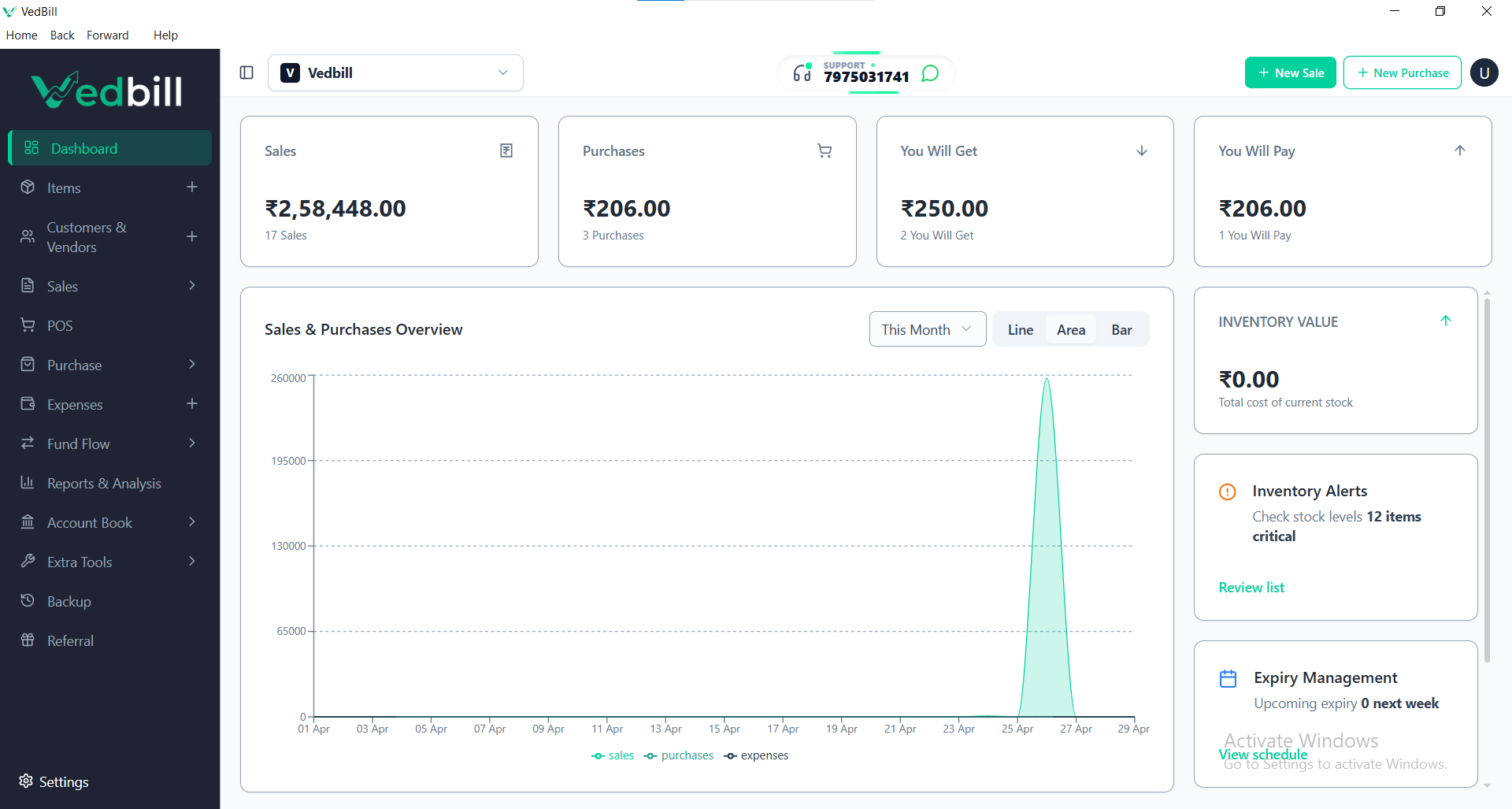
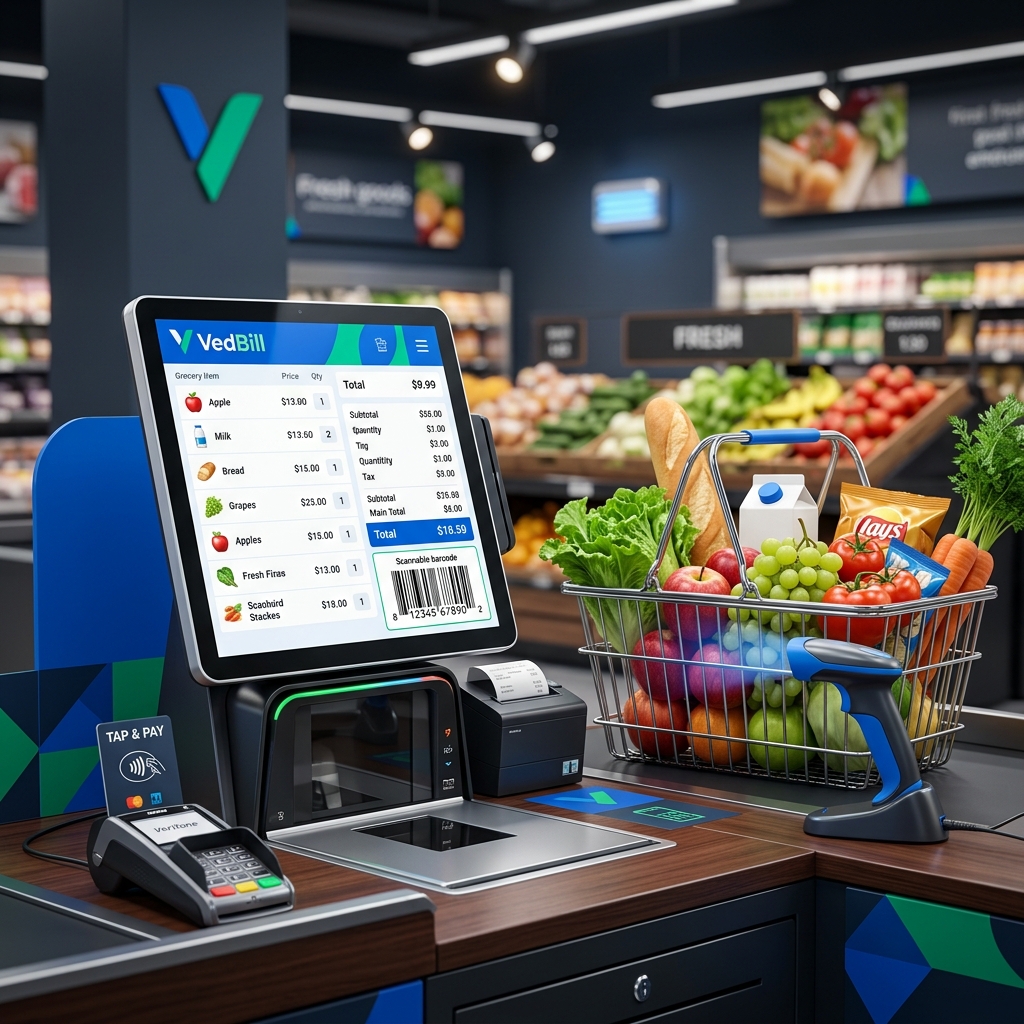
With an offline desktop POS like VedBill, automated price lookups and barcode scanning eliminate human calculation errors entirely.
The Hidden Costs of Retail Billing Mistakes
Billing mistakes damage retail businesses in two distinct directions:
1. Overcharging Customers (Loss of Trust)
When a cashier accidentally charges ₹180 for an item marked ₹150 on the shelf, or charges for an extra item by mistake, the customer feels cheated. Even if the store rectifies the charge, the customer leaves with a lingering suspicion that damages your reputation and drives them to competitors.
2. Undercharging Customers (Direct Capital Loss)
When a cashier enters the price of a small pack for a larger economy pack, forgets to scan an item in a crowded cart, or miscalculates change during busy evening hours, the financial loss comes straight out of the store owner's net profit margin.
3. Inventory Phantom Stock (Stockouts & Lost Sales)
If item A is sold but the cashier enters item B, the software registers item B as sold out while recording item A as still available. This creates "phantom inventory"—customers asking for item A are told it is out of stock, while suppliers are never instructed to reorder item B.
6 Proven Strategies to Eliminate Counter Errors
Implement these systematic operational habits to safeguard your store:
1. Complete Barcode Labeling Discipline
Every product on your shelves must carry an active barcode. For loose grocery items, dry fruits, unbranded garments, or hardware fasteners, print custom barcode stickers using your billing software and apply them during packaging. Never permit cashiers to type generic lump-sum charges like "Miscellaneous Grocery: ₹250".
2. Lock Cashier Master Permissions
In your billing software, restrict cashier permissions so staff cannot arbitrarily alter unit prices, delete finalized invoices, or apply custom unapproved discounts. Price adjustments must require an administrator password.
3. Implement Automated Change Tendering
Cash drawer discrepancies frequently stem from poor mental math when cashiers hand back change. Train staff to type the exact cash received (e.g., customer gives a ₹500 note for a ₹342 bill); the software immediately flashes the exact change due (₹158), preventing cash drawer shortages.
4. Provide Visual Feedback at the Counter
Position customer-facing displays or ensure counter monitors clearly face the shopper so they can see items, prices, and quantities appearing on screen in real time. Customers catch pricing discrepancies immediately, preventing disputes after receipts are printed.
5. Streamline Customer Return and Exchange Handling
Never allow returned goods to be swapped informally across the counter. When a customer exchanges an item, use the software's "Sales Return" feature to issue a formal credit note, ensuring the returned item is added back to available inventory while the replacement item is deducted.
6. Perform Weekly "Category-at-a-Time" Stock Audits
Instead of shutting down your store for a massive annual inventory audit, conduct weekly rolling audits. On Monday mornings, count shelf quantities of all cooking oils; on Tuesday, count laundry detergents. Compare physical counts against software inventory reports to identify shrinkage or mis-billing within days of occurrence.
Zero-Error Counter Audit Checklist
Evaluate your counter operations against this standard of excellence:
- [ ] Does every item on your store shelves have an active, scannable barcode?
- [ ] Are product prices and GST tax rates locked in the master software catalog?
- [ ] Do cashiers enter tendered cash amounts to let the software calculate change?
- [ ] Are customer exchanges handled exclusively through formal return entries?
- [ ] Are voided or cancelled bills protected by manager authorization?
- [ ] Do you perform weekly rolling stock reconciliations for fast-moving goods?
Comparison: Vulnerable Manual Billing vs Protected POS Automation
| Operational Scenario | Manual / Uncontrolled Billing | Protected POS System (VedBill) | | :--- | :--- | :--- | | Item Pricing | Cashier guesses or reads smudged tag | Instant accurate price retrieved via barcode | | Discount Application | Mental math; prone to unauthorized cuts | Predefined automated promotional rules | | Tax Calculation | Frequent rounding and rate errors | Exact statutory CGST/SGST/IGST calculation | | Change Given to Buyer| Mental subtraction; cash drawer shortages | Screen displays exact change to return | | Exchange Tracking | Casual hand swaps; inventory corrupted | Systematic return entry restores stock | | Discrepancy Tracing | Impossible to identify when error occurred | Full timestamped transaction audit trail |
The VedBill Solution: Built-in Safeguards for Retailers
VedBill provides built-in operational guardrails engineered to eliminate counter mistakes and protect retail profits:
- Barcode-Driven Accuracy: Instant plug-and-play USB barcode scanner integration guarantees that scanned items always reflect authorized master prices.
- Automated Tax Engine: Eliminates GST calculation mistakes with pre-configured Indian tax slabs and automatic intra/inter state tax splitting.
- Accurate Change Calculator: Built-in tender validation calculates exact change due for every cash transaction.
- Real-Time Stock Reconciliation: Every finalized transaction instantly updates inventory balances, giving you 100% accurate stock visibility.
- 100% Free Forever: Protect your store profitability without paying expensive monthly software subscriptions.
Frequently Asked Questions (FAQs)
1. How does barcode scanning prevent cashier undercharging?
When cashiers scan barcodes, product prices are retrieved directly from the master database on your computer. Cashiers cannot enter arbitrary lower prices, preventing accidental undercharging or unauthorized favoritism for acquaintances.
2. Can VedBill track which cashier billed a particular transaction?
Yes. VedBill supports multiple user profiles, allowing you to track which cashier or counter operator generated each invoice for accountability.
3. What should I do if a barcode sticker gets damaged on a shelf item?
If a barcode label is unreadable, cashiers can quickly search the item using its item code or the first three letters of its product name within VedBill's instant search bar, avoiding counter delays.
4. How does VedBill handle customer returns and exchanges?
VedBill features an integrated return workflow that accepts returned items, restores the units back into active inventory, and credits the customer's account or offsets the balance against new items.
Conclusion & Next Steps
Retail billing errors and inventory discrepancies are not inevitable costs of doing business. By replacing manual guesswork with barcode automation, locked pricing rules, and structured return workflows, you protect your profit margins and build lasting customer confidence.
Eliminate counter errors and stock discrepancies today.
Download VedBill Free for Windows Desktop and establish complete accuracy across your retail checkout counter.
Manage Your Store with VedBill Desktop Software
VedBill is 100% free desktop billing software built for retail shops, supermarkets, pharmacies, and small businesses in India. No recurring subscriptions or expensive cloud fees.
VedBill Editorial Team
Retail & Billing Specialist at VedBill