Desktop Billing Software vs Cloud Billing Software: Which Is Better for Indian Retailers?
Compare desktop billing software versus cloud billing software for Indian retail shops. Analyze checkout speed, offline reliability, subscription costs, and data privacy.

When modernizing retail operations, Indian shop owners face a fundamental architectural choice: should you choose an offline desktop billing software or an online cloud-based billing application?
Software marketing often portrays cloud systems as the modern standard. However, the everyday reality of Indian retail—characterized by high customer foot traffic, unpredictable broadband connections, tight profit margins, and strict data privacy requirements—makes this decision far more nuanced.
This in-depth comparison analyzes the structural differences between desktop billing software and cloud POS systems to help you choose the ideal platform for your business.
Direct Answer: Desktop Billing vs Cloud Billing—Which Is Better?
For the vast majority of independent retail shops, Kirana stores, supermarkets, pharmacies, and small businesses in India, offline desktop billing software is significantly better than cloud billing software.
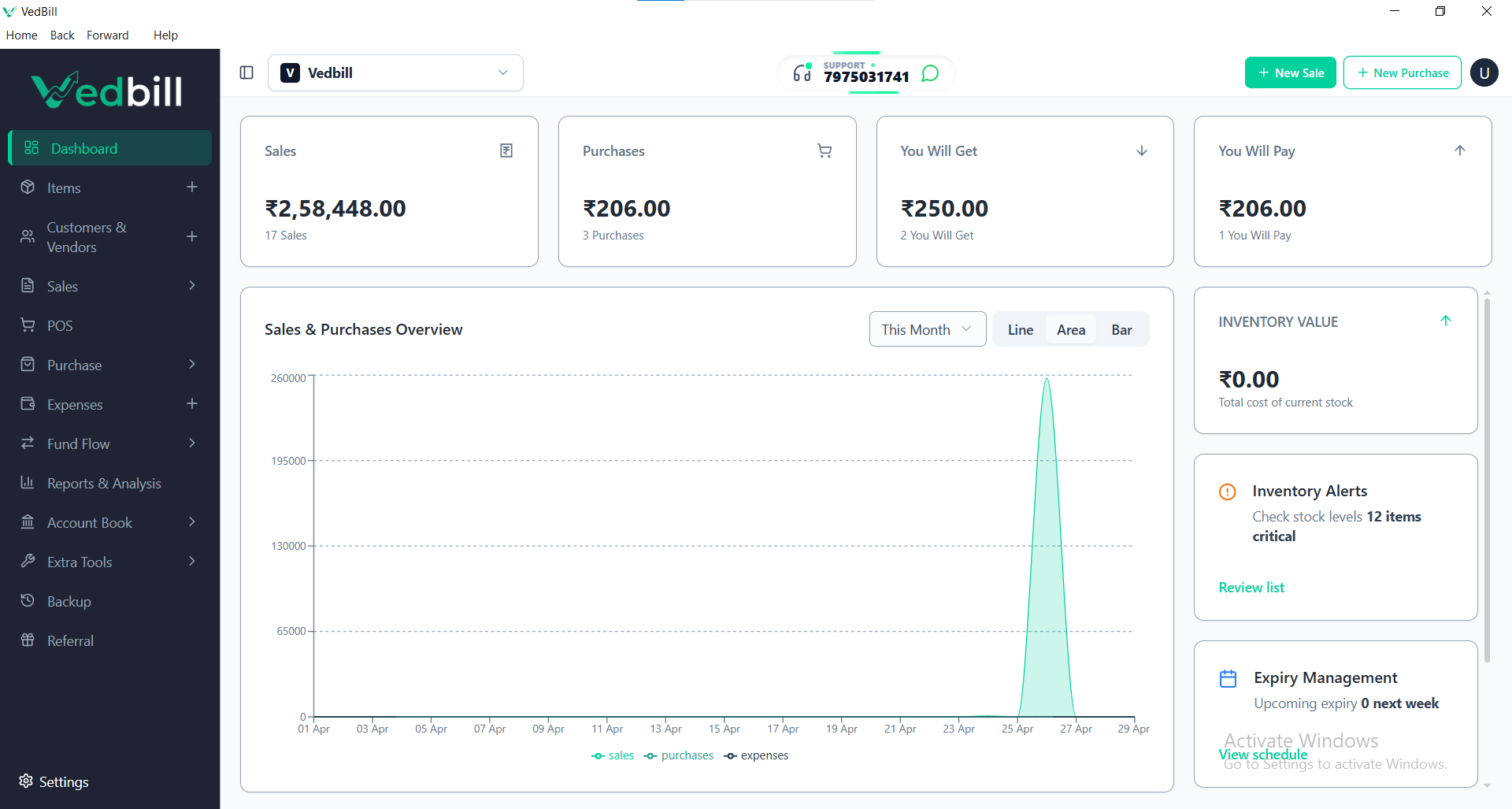
Desktop billing software processes transactions instantly on your local computer hard drive, functions 100% offline without internet dependency, eliminates recurring monthly subscription fees, and keeps financial data securely in your physical possession. Cloud billing software is generally only necessary for large corporate enterprises operating multiple distributed chain outlets that require real-time centralized synchronization.
Core Architectural Differences: How They Work
Understanding how each system operates under the hood explains why their performance differs so drastically at the retail counter:
Offline Desktop Billing Software
A desktop billing program installs directly onto your Windows computer. All software logic, product catalogs, customer records, and transaction histories reside on your local hard drive or solid-state drive (SSD). When a barcode is scanned, the database query executes locally in fractions of a millisecond. No data packets travel across the internet to generate a receipt.
Online Cloud Billing Software
A cloud billing system runs inside a web browser or a lightweight client connected to a remote server. Every item scanned, price looked up, and receipt finalized requires an HTTP request sent over the internet to a third-party server data center. If the server is slow, or if your local broadband experiences packet loss, your counter freezes.
Head-to-Head Comparison: Desktop vs Cloud Billing
| Comparison Factor | Offline Desktop Software (e.g., VedBill) | Cloud Web-Based Software | | :--- | :--- | :--- | | Internet Dependency | 100% Offline; Zero internet required | Mandatory continuous internet connection | | Counter Transaction Speed | Instant (<0.2 seconds per item scan) | Noticeable latency (1 to 4 seconds per scan) | | Subscription Cost | ₹0 (Completely Free) | ₹8,000 to ₹25,000 per year per terminal | | Data Ownership & Privacy | Stored locally on your private PC | Stored on third-party vendor servers | | Weather & Outage Resilience | Unaffected by cable cuts or rainstorms | Counter completely halts during broadband cuts | | Hardware Compatibility | Direct USB plug-and-play with printers/scanners | Often requires complex network printer setups | | Recurring Financial Burden | None; Zero ongoing overhead | High recurring overhead; recurring SaaS lock-in |
Detailed Analysis of Key Decision Factors
1. Checkout Speed and Foot Traffic Flow
At a busy retail counter with a queue of six customers, every second matters. With desktop software, scanning five items, applying a discount, and printing a thermal receipt takes under seven seconds. With cloud software, each barcode scan must ping an external API server; during peak evening hours, network congestion frequently causes frustrating pauses between scans.
2. Reliability During Broadband and Power Outages
In many commercial corridors across India, internet service is susceptible to disruptions from road construction, fiber cuts, and monsoon downpours. When internet connectivity drops, a cloud POS counter cannot create a bill, calculate taxes, or print a receipt. In contrast, an offline desktop system connected to a standard inverter or UPS battery continues billing smoothly without missing a single transaction.
3. Financial Costs: Capital Expenses vs Recurring SaaS Drain
Cloud software companies operate on Software-as-a-Service (SaaS) subscription models. While the initial monthly price might seem modest (e.g., ₹999/month), over five years a single retail counter pays nearly ₹60,000 in software fees alone—with prices often rising each year. Desktop software like VedBill is completely free, saving small business owners tens of thousands of rupees that can be reinvested into working capital and inventory.
4. Data Security, Privacy, and Business Independence
When using cloud billing software, your daily turnover, customer phone numbers, supplier purchase prices, and profit margins are stored on commercial remote servers. If you decide to cancel your subscription, accessing your historical sales records can become difficult or expensive. With desktop software, your database belongs exclusively to you, stored safely on your physical PC.
When Does Cloud Billing Make Sense?
To remain objective, cloud billing software does offer advantages in specific business scenarios:
- Multi-Branch Retail Chains: A business operating 15 retail outlets across different cities needing centralized real-time stock transfer visibility.
- Remote Owner Monitoring: Business owners who travel frequently and require mobile dashboards to monitor live sales figures from anywhere in the world.
- Omnichannel E-Commerce Integration: Stores that actively synchronize physical shelf stock with live Shopify, Amazon, or WooCommerce storefronts.
For standalone physical retail stores, however, these complex features rarely justify the ongoing costs, speed penalties, and internet vulnerabilities of cloud systems.
The VedBill Solution: High-Speed Offline Power
VedBill provides Indian retailers with the ideal balance of modern POS technology and local offline stability:
- Pure Desktop Performance: Engineered for Windows 10 and 11, delivering instantaneous barcode scanning and receipt generation.
- Completely Free Forever: No setup fees, no monthly software subscriptions, and no paid feature tiers.
- Complete GST Compliance: Automatic tax calculations for intra-state (CGST + SGST) and inter-state (IGST) invoices with one-click GSTR Excel exports.
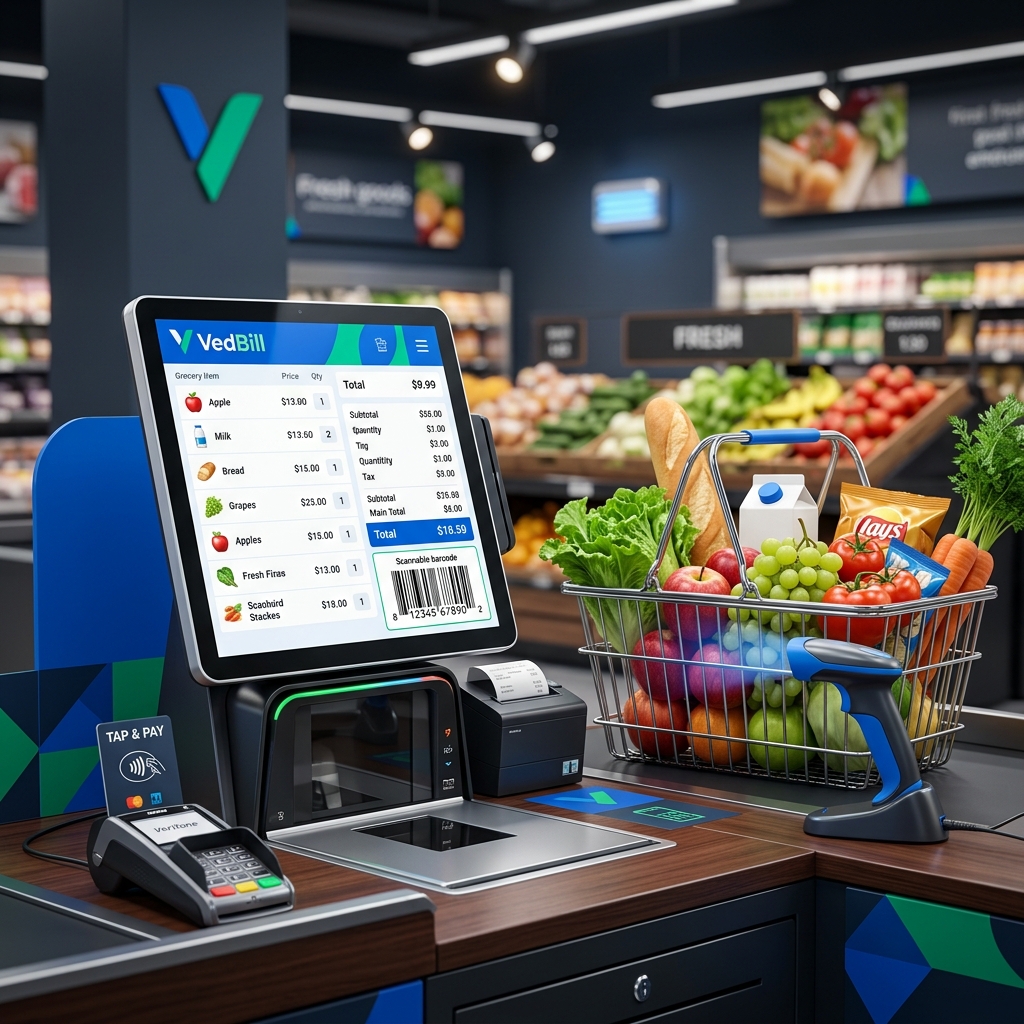
- Plug-and-Play Hardware Integration: Direct support for any standard USB thermal printer (58mm/80mm), laser printer, and 1D/2D barcode scanner.
- Built-in Local Backup: Secure one-click database export to external pendrives ensures complete peace of mind.
Frequently Asked Questions (FAQs)
1. If desktop software is offline, how do I back up my sales data?
VedBill features an automated one-click backup tool. You can copy your entire database file to a USB pendrive, external hard drive, or private Google Drive folder in seconds, ensuring your data is always protected against computer failure.
2. Can I use desktop billing software on multiple computers in the same shop?
Yes. You can install desktop billing software on your primary billing computer and use secondary machines for inventory entry or billing, depending on your local network configuration.
3. Does offline desktop software handle GST rate changes?
Yes. In VedBill, tax slabs (0%, 5%, 12%, 18%, 28%) and HSN codes are completely configurable. If the GST Council updates tax rates for any commodity, you can update the tax rate in your item master catalog in seconds without needing software reinstalls.
4. Is my customer data safer on desktop software or in the cloud?
With offline desktop software, your customer data and financial records are stored exclusively on your physical computer hard drive, eliminating risks associated with cloud data leaks, vendor server downtime, or third-party unauthorized data mining.
Conclusion & Recommendation
For the vast majority of Indian retail stores, Kirana shops, supermarkets, and MSMEs, offline desktop billing software remains the superior operational choice. It delivers unmatched counter speed, immune resilience against internet outages, complete data sovereignty, and zero ongoing subscription costs.
Experience the speed and reliability of offline desktop billing.
Download VedBill Free for Windows Desktop today and keep your checkout counter running at maximum speed.
Manage Your Store with VedBill Desktop Software
VedBill is 100% free desktop billing software built for retail shops, supermarkets, pharmacies, and small businesses in India. No recurring subscriptions or expensive cloud fees.
VedBill Editorial Team
Retail & Billing Specialist at VedBill